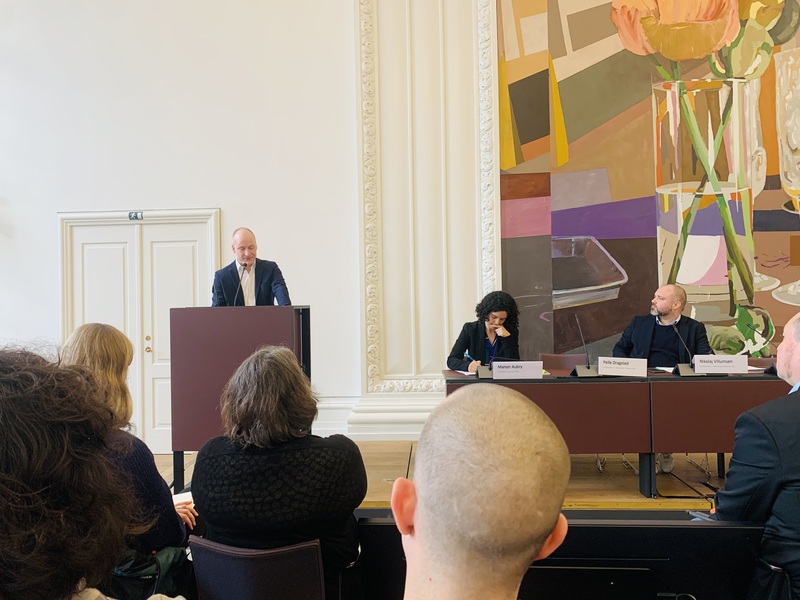
The opening session of the meeting, which took place in the Danish Parliament, included welcoming speeches by Pelle Dragsted, spokesperson for the Red/Green Alliance of Denmark, and Manon Aubry, MEP for France Insubmissive and co-coordinator of The Left in the European Parliament.
This was followed by a seminar on the just and green transition and quality jobs with trade union representatives and climate activists, and a panel made up of Catarina Martins from the Left Bloc, Li Anderson from Vasemmistoliitto (Vas) in Finland, Pernando Barrena from the Euskal Herria Bildu (EH Bildu) party in the Basque Country and Maciej Konieczny from Razem in Poland.


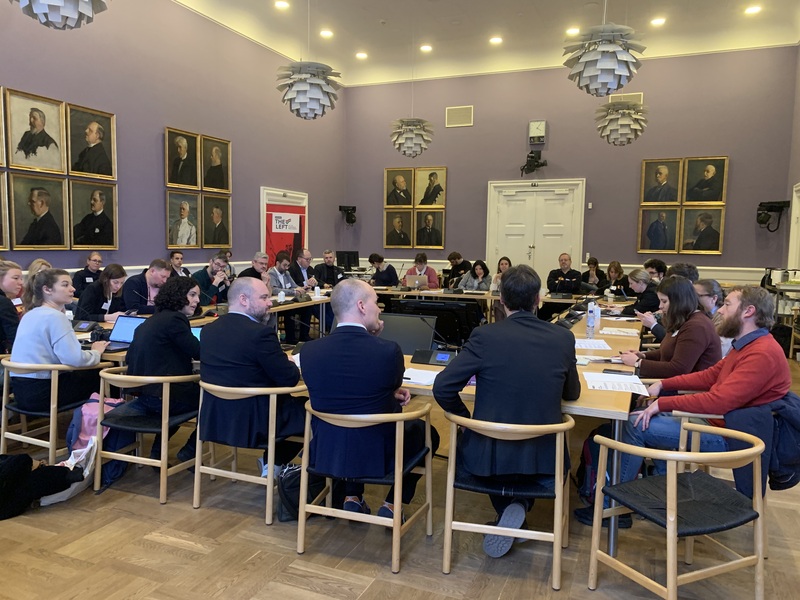
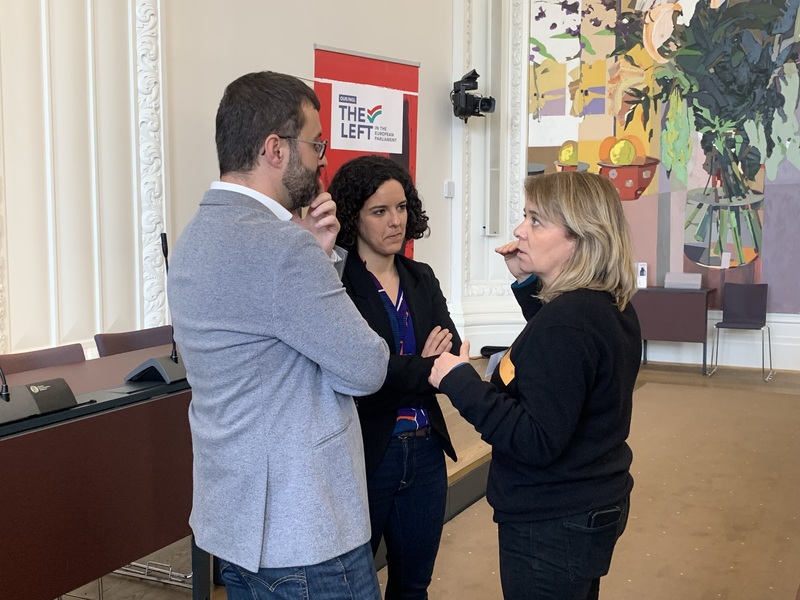
After this first moment, the party representatives met to join forces in defining an agenda for a just ecological transition and in building a program for the platform, which will be presented shortly.
In an interview with Esquerda.net, Nikolaj Villumsen, from the Red/Green Alliance of Denmark, explained that with greater support in the 2024 European elections, the European progressive left will have even more strength to continue fighting for solidarity, democracy, equality and climate justice.

Nikolaj Villumsen, from the Red and Green Alliance of Denmark.
How did the "Europe for the People" platform come about?
We had a meeting in Paris at the end of last year where we decided to establish a platform of progressive parties from the green left in order to define, before the European elections, a progressive agenda for green transition, workers' rights and equality.
We see that the far right is growing and that it is a threat to workers' rights, the climate and more egalitarian societies. That's why the left is so, so necessary.
Is this platform growing?
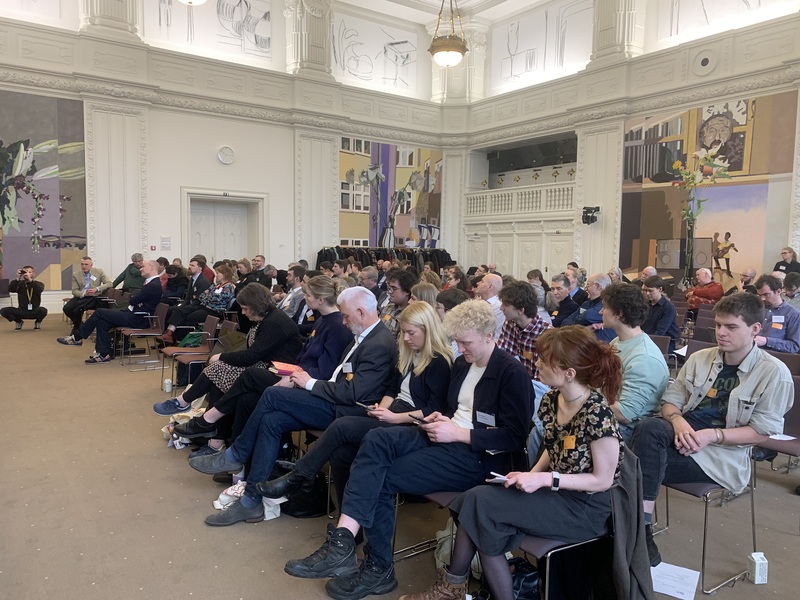
At the first meeting we brought together six parties, and today we have fifteen. So it really is a growing project. And we're very happy that so many political forces are coming together at this meeting in Copenhagen, which the Red-Green Alliance of Denmark is proud to host.
But it is also very important to underline that what we are seeing is that there are strong political forces in many different countries that are here, that we are uniting from north to south, from east to west, which I believe is the key to being stronger after the next European elections and securing results in the next legislature.
Do you expect this platform to grow even more?
As an example, we know that our friends from Galicia would have liked to be here, but they have elections on Sunday. So they couldn't make it. And, of course, we hope that even more parties will join and see themselves on this platform.
What are the main points that unite you?
I think it's fundamental to call for a just ecological transition, for investment policies instead of austerity, for investment in people and new green jobs for the future, but also to have a firm position on human rights and the defense of international law. We are witnessing a dangerous situation in the world, with Putin attacking Ukraine, Israel's illegal occupation of Palestine, and the terrible massacres in Gaza. That's why we need Europe to stand firm in defense of human rights and international law. And that's what we're asking for. We don't want to see double standards from the European Union, where on the one hand we have the tough sanctions against Putin, which we support. But at the same time, no action is taken against Netanyahu. We think the Russian occupation of Ukraine is bad, just as we think the Israeli occupation of Palestine is bad. So we're not having double standards. We are sending a clear message of respect for international law.

In several of the countries meeting in Copenhagen today, the extreme right is on the rise. Is it essential to have a common strategy to respond to this onslaught?
Of course. We want to stand firm in defense of human rights, in defense of women's rights and in defense of the right to seek asylum.
The lessons of the Second World War were that, for example, Jews fleeing the Nazi regime in Germany were expelled and not allowed to enter Denmark. That's why, after the horrors of the Second World War, the right to seek asylum for those fleeing war or persecution is a human right that we must protect. And the European Union is also threatening this right, with the externalization of borders, in which we are making Erdogan, or the brutal militias in Libya, the border guards. This is not acceptable.
The right sometimes accuses left-wing parties of not having proposals for the economy. What is the alternative to austerity that this platform proposes?
We need to have investments. We saw how, during the financial crisis, speculators and bankers destroyed the economy, but it was workers, ordinary people, who paid the price, with cuts to social security, wage cuts and a huge attack on labor rights. Especially in the countries that were under the troika. And we also saw how, as during the pandemic, all economic governance and the state aid rule were ignored and suspended.
Things are not set in stone, a strong left can make the difference.
The social democrats, or socialists as they call themselves, together with the right, have once again imposed austerity and economic governance. This is something that will hurt us all, and even more so the poorer economies of the EU.
It is also clear that we cannot achieve the necessary ecological transition, and we cannot make it fair, if we are not allowed to guarantee the investment needed to invest in renewable energy to lower electricity bills.
What are the main challenges facing the European left at the moment?
I think the main challenge we face is, of course, the rise of the far right. And that is also why we are so important.
I think that over the last almost five years we have shown that we are making a difference in the European Parliament. We are making a difference for workers, for the climate, for a more equal society.
We can't predict what the outcome of the next European elections will be. But we can be sure of one thing: if there is to be a progressive majority in the next European Parliament, the presence of the parties represented here today will be crucial.
And we say that we want to make our voices heard and we want to use the power that we hope to gain with the support of the people to achieve better protection for workers, for a just ecological transition and for a firm EU position on human rights and international law, and solidarity with Palestine.
What is the aim of this particular meeting and what actions are being prepared for the future, in the run-up to the European elections?
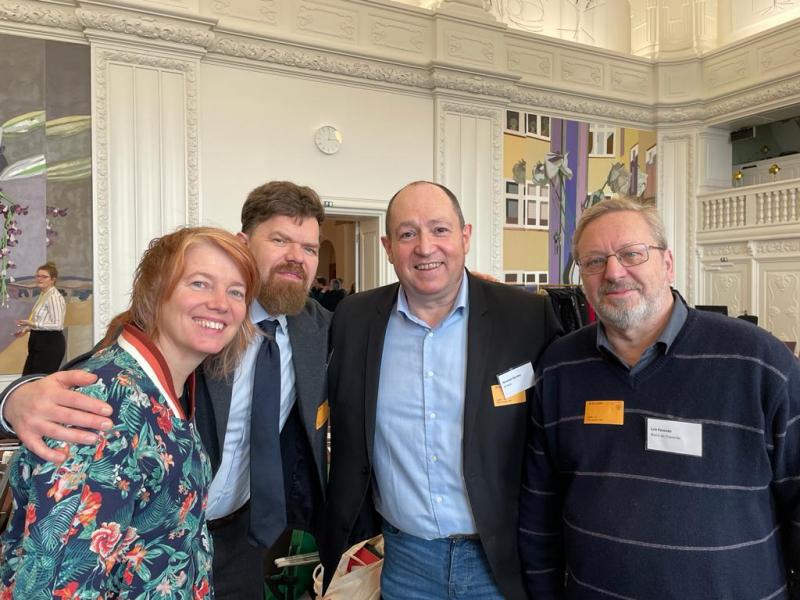
Naturally, we are defining an agenda for a just ecological transition. In addition to the representatives of the fifteen parties, we are joined at this meeting by Judith Kirton-Darling, general secretary of IndustriAll Europe, Flemming Gronsund, vice-president of the Confederation of Danish Workers' Unions, and Caroline Bessermann, a climate activist from Green Youth Denmark.
We are committed to building a ten-point program for our platform, which we will present shortly. We want to show that we are together from north to south, east to west, on these points.
Then we will continue to try to use every opportunity we can to establish a progressive, left-wing green agenda and to help each other, to strengthen ourselves.
Will you therefore have new joint initiatives and common communication?
Yes, of course. We will do joint activities that will highlight the priorities of our program, such as the defense of workers, the fight against austerity and the need for investment in a just green transition. As well as the protection of human rights that we see threatened, both in Gaza, but also within the European Union. When we look at the authoritarian right and the regimes in some EU countries, such as Hungary, we have to be alarmed.
Is the New Pact for Migration and Asylum another example?
It certainly is. The brutal and cynical policies of the migration pact will certainly not lead to fewer people fleeing their countries. Their result will be that more people will die trying to flee war and oppression. People will continue to come, but they will be treated even worse. Much worse.